
- Buy Crypto
- Markets
 Futures
- Spot
- Copy Trade
 Earn
Earn- More
Unveiling the Movement Liquidity Provider Sell-Off Scandal: Secret Contracts, Shadow Advisors, and Hidden Intermediaries

Original Article Title: Inside Movement's Token-Dump Scandal: Secret Contracts, Shadow Advisers and Hidden Middlemen
Original Article Author: Sam Kessler, CoinDesk
Original Article Translation: Aki Chen, Wu Shuo Blockchain
Layer 2 blockchain project Movement Labs is reportedly investigating a fraudulent liquidity protocol incident. What was originally intended to facilitate the smooth listing of the MOVE cryptocurrency token has turned into a market-shaking dumping scandal. The protocol allegedly, without full knowledge of the project team, handed over control of 66 million MOVE tokens to a shadowy intermediary entity called Rentech. Rentech, in the protocol, purportedly acted as both the "Web3Port subsidiary" and the "Foundation agent," engaging in self-trades. This arrangement directly triggered a $38 million token dump the day after MOVE's listing, causing a significant price drop and leading to a Binance ban.
Despite internal objections to the protocol, senior management still pushed for its signing, raising serious concerns about governance failures, lack of due diligence, and conflicts of interest. Currently, multiple executives and legal advisors are under scrutiny, and the project's governance structure and partnership mechanisms are being thoroughly questioned. This crisis has revealed deep-seated flaws in Movement's institutional design, risk control, and compliance capabilities, potentially causing long-term damage to its future reputation and ecosystem development.
MOVE Token Plummets on Listing, Movement Labs Suspected of Misguided High-Risk Protocol Signing
According to internal documents reviewed by CoinDesk, Movement Labs, the blockchain project behind the MOVE cryptocurrency token, is conducting an internal investigation into a contentious financial protocol. This protocol may have granted significant control over the token market to a single entity without full knowledge of the project team, causing structural imbalance.
The protocol directly resulted in the concentrated dumping of 66 million MOVE tokens on December 9, 2025, the day after the token's exchange listing, triggering a cliff-like price drop and raising widespread questions about "internal trading" and rent-seeking. Of note, the MOVE project received a public endorsement from the Trump-backed crypto venture fund World Liberty Financial, adding political and industry influence to the event.
Movement Labs Co-Founder Cooper Scanlon announced in an internal Slack message on April 21 that the team is investigating a critical issue: how over 5% of the MOVE token originally allocated for liquidity provider Web3Port was transferred to an intermediary entity named Rentech.
Reportedly, the Movement Foundation was initially informed that Rentech was a subsidiary of Web3Port, but the investigation revealed otherwise. Rentech, on the other hand, denies any misleading behavior.
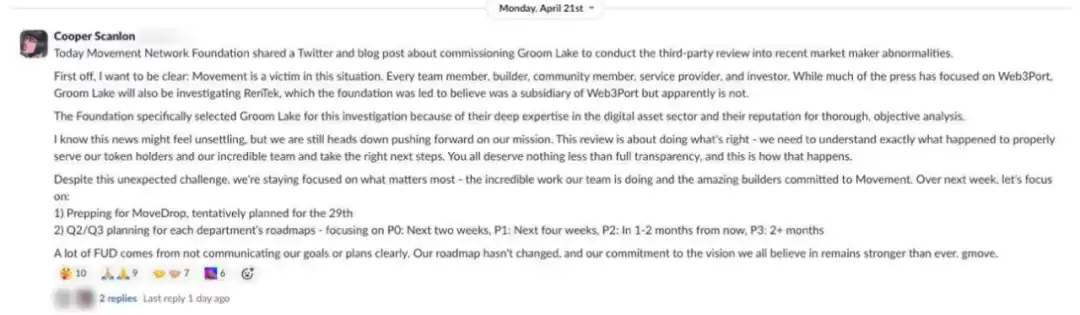
Rentech Holds Unilateral Control Over Nearly Half of the Circulating Supply, Resulting in Imbalance in MOVE Token Circulation
According to an internal memo from the Movement Foundation, the agreement between Movement and Rentech lent a portion equivalent to half of the MOVE token's circulating supply to this single counterparty. This arrangement granted Rentech an unusually significant market influence at the early stages of the token listing.
Several interviewed industry experts have pointed out that this centralized structure deviates significantly from the decentralized distribution principle typically pursued by crypto projects, making it vulnerable to price manipulation or one-sided arbitrage.
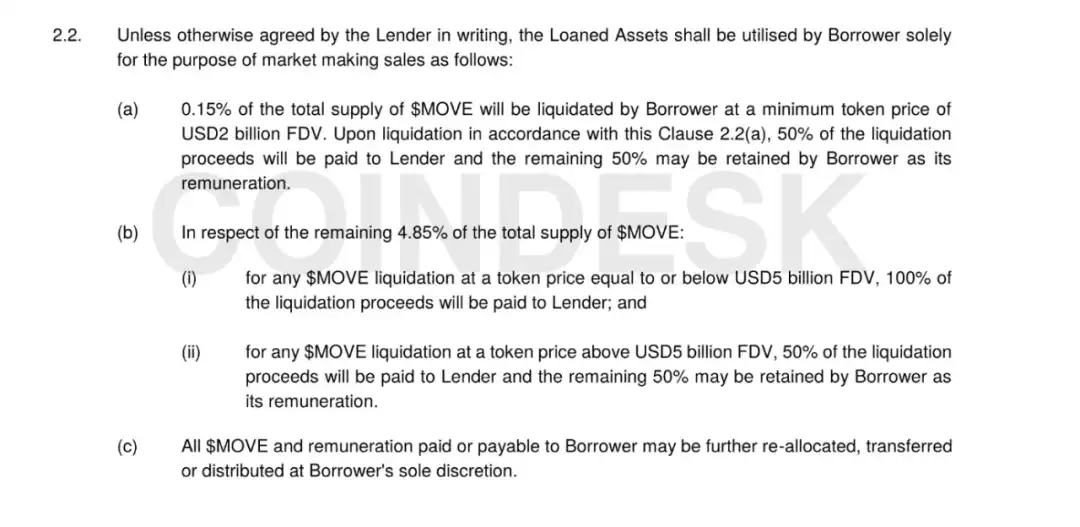
Upon reviewing a version of the contract obtained by CoinDesk, veteran crypto industry founder Zaki Manian noted that certain terms in the agreement effectively set an incentive for "pumping up the MOVE token's fully diluted valuation to over $5 billion before dumping on retail." He bluntly stated, "Even the discussion of such tactics in a written document is alarming." This comment further deepened external skepticism regarding Rentech's intentions and ethical boundaries in the agreement.
In theory, a liquidity provider is engaged by the project to provide liquidity services for a newly listed token, with the responsibility to facilitate buying and selling within an exchange using funds provided by the project to maintain price stability and market depth. However, in practice, this role also carries abuse risks.
In the absence of regulation or transparency in the agreement, a liquidity provider may become a tool for insiders to manipulate the market and surreptitiously shift significant token holdings, evading detection from external parties and severely compromising the interests of retail investors and market fairness.
Contract Exposure Reveals Crypto Gray Areas: How Public Projects Turn into Few People's Arbitrage Tools in a Regulatory Vacuum
A series of contract documents obtained by CoinDesk has revealed a little-known gray area in the crypto industry: in an environment lacking effective regulation and legal transparency, blockchain projects originally aimed at the public are very easily used as a vehicle for a small group of individuals behind the scenes to profit.
The contents of these agreements show that once a project team is negligent in structural design and compliance oversight, so-called "decentralized" projects may also be completely privatized by a few operators through unequal terms, deviating from the original intent of fairness and openness.
In the crypto market, rumors of manipulation and abuse surrounding market-making mechanisms have long been heard, but the specific details of such operations, contract structures, and benefit arrangements are rarely brought to light. As a result, the internal contract and agreement details disclosed by Movement Labs in this incident have become a rare window to observe the black box operation and gray market-making space of Web3 projects, once again bringing the industry's focus back to the most basic yet often overlooked principle of "transparency."
The market-making contract reviewed by CoinDesk shows that Rentech appeared in the transaction with Movement Foundation in two capacities at the same time: on the one hand, as an agent of Movement Foundation, and on the other hand, it signed the agreement as a subsidiary of Web3Port. This structure provided Rentech with the possibility to take on the "intermediary dominance" in the transaction, theoretically allowing it to set transaction terms on its own and profit from it under information asymmetry.
The market-making agreement reached between Movement and Rentech eventually opened a sell-off channel for a group of wallets associated with Web3Port. This Chinese financial institution claimed to have served MyShell, GoPlus Security, and the crypto fund World Liberty Financial associated with Donald Trump. These wallets quickly liquidated approximately $38 million worth of tokens on the day after the MOVE token was first issued on the exchange, causing a sharp market fluctuation and raising concentrated doubts about the motives and legitimacy of the agreement arrangement itself.
Binance Bans Market-Making Account for "Irregular Behavior," Movement Initiates Emergency Token Buyback
In the wake of the incident, the major exchange Binance has banned the involved market-making account for "improper behavior." Meanwhile, the Movement project team urgently announced the initiation of a token buyback plan in an attempt to stabilize market sentiment and regain community trust.
Similar to startup employee stock options, most cryptocurrency projects set a lock-up period during token distribution to restrict the core team, investors, and early contributors from selling off a large portion of their holdings in the initial stages of the project.
This mechanism is intended to protect market stability and prevent insiders from taking advantage of information asymmetry to profit early. However, in the Movement event, the bypassing of lock-up restrictions in token flows was precisely the core issue that sparked external scrutiny.
Binance's action to freeze the involved accounts quickly prompted speculations in the community, with many observers suggesting that this might indicate a prior agreement between Movement project insiders and Web3Port to circumvent the standard lock-up mechanism for early token sales.
In response to this scrutiny, the Movement team denied any wrongdoing, asserting that they had not engaged in any illicit transfer arrangements with third parties. However, the information confusion and contract structure flaws exposed by this event still make it challenging to completely dispel the impression of "insider trading."
Star Layer 2 Project Embroiled in Controversy, Rentech Protocol Faces Mutual Accusations
Movement is an Ethereum scaling Layer 2 network built on the Facebook open-source Move language. Due to its technical innovation and capital backing, it has rapidly become one of the most discussed emerging projects in the cryptocurrency industry in recent years.
The project was founded by two only 22-year-old dropouts from Vanderbilt University, Rushi Manche and Cooper Scanlon, who raised $38 million in funding and was selected for the World Liberty Financial crypto investment portfolio backed by Trump. In January 2025, Reuters reported that Movement Labs was about to complete a new round of funding of up to $1 billion, with a valuation potentially reaching $30 billion.
However, significant internal disagreements emerged within the project surrounding the controversial market-making agreement with Rentech. CoinDesk interviewed over a dozen sources familiar with the internal dynamics of the project (most requested anonymity), and they provided various contradictory accounts.
Rentech's owner, Galen Law-Kun, denied any misleading behavior and stated that the transaction structure was designed in coordination with YK Pek, the general counsel of the Movement Foundation. However, internal memos and communication records reviewed by CoinDesk indicate that Pek initially strongly opposed the agreement and denied involvement in Rentech's establishment process.
Movement Labs Co-Founder Scanlon stated in an internal Slack message, "Movement is a victim in this event." This statement also signifies that the project team is attempting to shift responsibility towards an external operator.
According to four anonymous sources familiar with the progress of the internal investigation, Movement is actively reviewing the role of its co-founder Rushi Manche in the Rentech agreement. It is alleged that Manche initially forwarded the agreement to the team and advocated for the collaboration within the organization.
Also under investigation is Sam Thapaliya — the founder of the crypto payment protocol Zebec and a business partner of Rentech owner Galen Law-Kun. While Thapaliya did not hold a formal position at Movement, he had long been involved in core affairs in an "informal advisory" capacity, making his specific influence in this event a key focus of the project's internal audit.
Reject-Then-Accept Approach, Movement Bypasses Due Diligence Mechanisms, Governance Structure Questioned
Despite initially vetoing a significant risk associated with the market-making agreement with Rentech, Movement eventually signed a structurally similar revised version of the agreement. The core reliance of the agreement was based on an oral assurance from an intermediary with almost no public track record.
Behind this decision lies a spotlight on the governance shortcomings in the current crypto industry. As per common practices, to mitigate securities regulatory risks, crypto projects usually split operations into two entities: one managed by a non-profit foundation responsible for token management and community resource allocation, and another being the for-profit development company in charge of core technical development. Movement Labs serves as the project's development entity, while Movement Foundation is responsible for token affairs.
However, internal communication materials reviewed by CoinDesk show that the initially intended independently operating structure failed in the Movement case. Co-Founder Rushi Manche, while nominally an employee of Movement Labs, played a leading role in critical matters of the non-profit foundation. This overlap in roles undermined the dual-entity mechanism that was supposed to mitigate compliance risks.
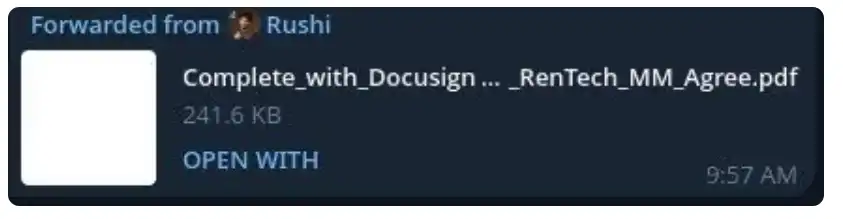
On March 28, 2025, Co-Founder Rushi Manche sent a draft market-making agreement to Movement Foundation via Telegram, stating that the contract "needs to be signed as soon as possible."
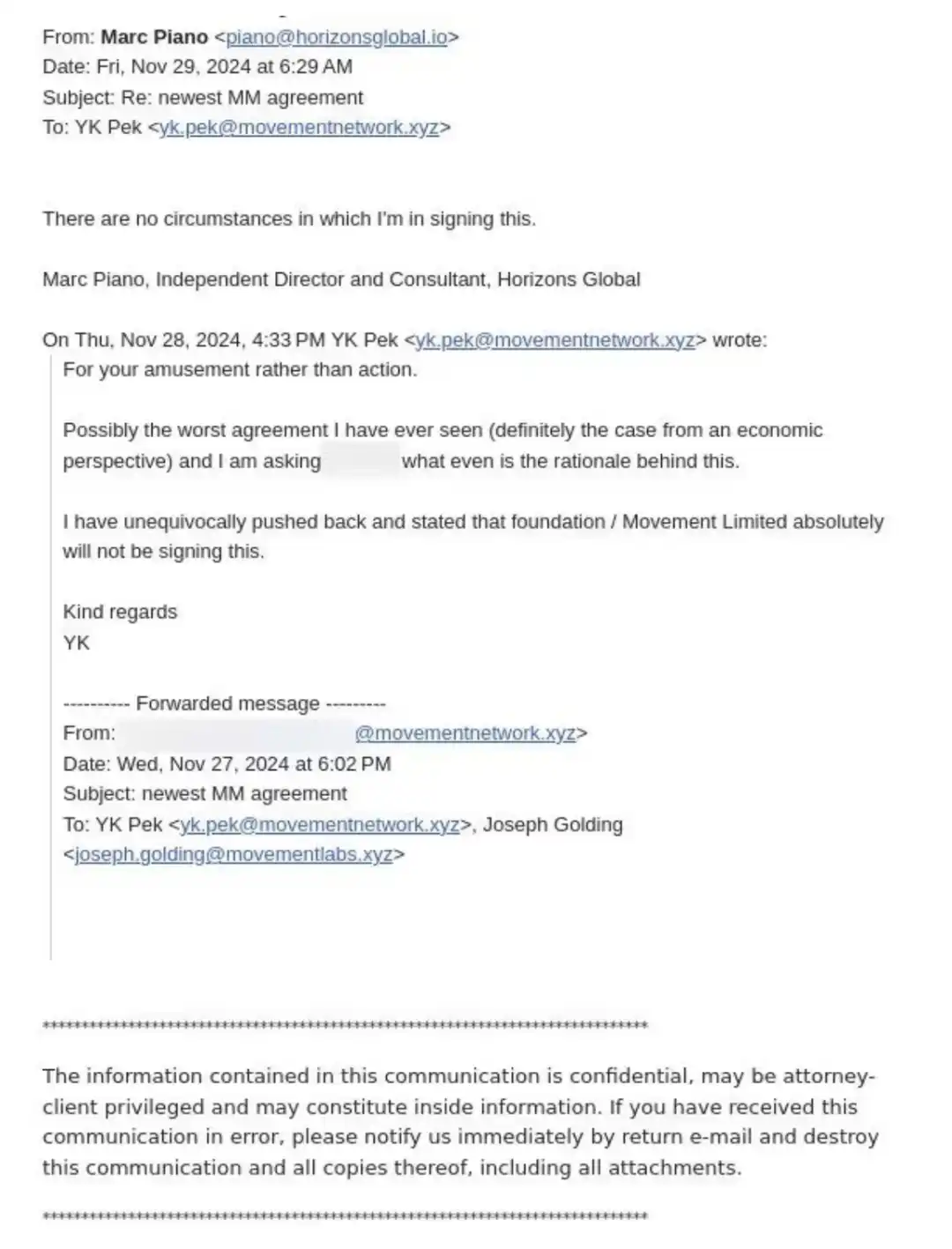
On November 27, 2024, Rentech submitted a market-making agreement draft to Movement, which included lending up to 5% of the total MOVE token supply to Rentech. According to the contract, Rentech was the borrower, and Movement was the lender. However, this agreement was ultimately not signed.
Rentech, being a company with almost no public background or on-chain records, immediately triggered internal alert within the Foundation with its significant token borrowing request. Movement Foundation's legal counsel, YK Pek, bluntly stated in an email that the document was "possibly the worst agreement I've ever seen." In another memorandum, he further pointed out that if executed, the agreement would amount to handing over substantial control of the MOVE market to a vaguely identified external entity.
Additionally, Marc Piano, a director of the Foundation registered in the British Virgin Islands, also refused to sign the agreement. The various objections mentioned above show that internal awareness of the risks of this agreement within Movement was actually very clear; however, it failed to prevent the agreement from proceeding in a modified form in subsequent processes, further exposing governance failures.
One particularly notable clause in the contract stated that once the Fully Diluted Valuation (FDV) of the MOVE token exceeded $5 billion, Rentech could begin liquidating its held tokens and share the resulting profits with Movement Foundation on a 50:50 basis.
Cryptocurrency industry veteran Zaki Manian pointed out that this structure essentially created a "perverse incentive mechanism," encouraging the market maker to artificially pump the MOVE price to concentrate its large holdings for profit-taking when the valuation is inflated. This design not only deviates from the original purpose of market-making to serve price stability but also could directly harm retail investors' interests.
Although Movement Foundation initially refused to sign the high-risk market-making agreement, its negotiations with Rentech did not cease. According to three sources interviewed by CoinDesk and legal documents reviewed, Rentech later claimed to the Foundation that it was a subsidiary of the Chinese market-making institution Web3Port and voluntarily offered to provide $60 million in collateral, thereby increasing the agreement's attractiveness.
Under the above conditions, Movement Foundation accepted a revised agreement on December 8, 2025. This version made modifications to some key terms, removing one of the original most contentious clauses — the right for Web3Port to sue Movement Foundation for compensation if the MOVE token failed to list on a specific exchange.
Despite some formal adjustments to the protocol, this compromise decision indicates that the foundation has relaxed its risk mitigation stance in the face of multiple pressures and incentives, ultimately laying the groundwork for subsequent events.
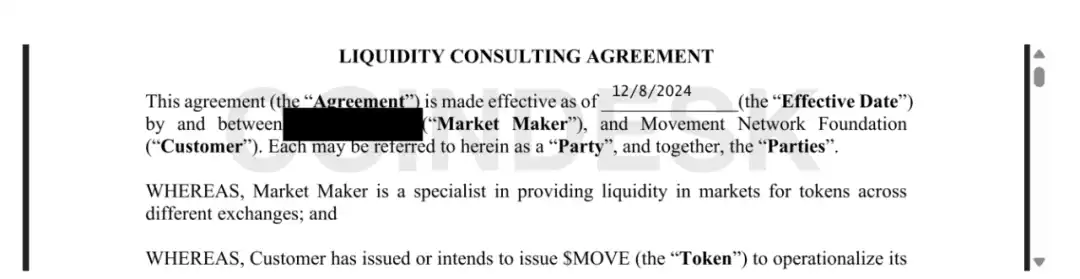
On December 8, 2025, the Movement Foundation and Rentech officially signed the revised liquidity provision agreement. Although Rentech is explicitly labeled as "Web3Port" in the agreement (the name has been redacted in some documents), in essence, its role as the borrower remains unchanged, with the foundation still being the lender.
Of note is that the main drafter of this agreement is none other than the foundation's legal counsel, YK Pek, who had previously expressed clear opposition to the initial version of the agreement. Despite the removal of some of the most contentious clauses in the revised version, the core structure remains unchanged: Web3Port can still borrow up to 5% of the MOVE token's total supply and can sell in a certain manner to realize profits.
Further technical details reveal the deliberate nature of the operations behind the agreement—the domain name "web3portrentech.io" registered under Rentech's director's email was only registered on the day the agreement was signed.
Was the agreement already a done deal? Web3Port and "Movement" secretly signed a contract, with the foundation only finding out later
According to three sources close to the event, when the Movement Foundation formally signed the agreement on December 8, 2025, they were unaware that Web3Port had already, weeks prior, signed a similar cooperation agreement with the nominal "Movement."
This "preliminary agreement" not only bypassed the foundation's formal processes but also circumvented the required compliance review and governance mechanisms.
Based on a contract dated November 25, 2025, obtained by CoinDesk, Web3Port had already signed a highly similar liquidity provision agreement with Rentech before the official signing with the Movement Foundation. In this agreement, Rentech was identified as the lender, Web3Port as the borrower, and Rentech was directly referred to as the representative of "Movement" in the document.
This "shadow agreement" nearly replicated the original proposal that the foundation later rejected, indicating that some key arrangements had already been established through informal channels without going through the foundation's approval process. This discovery confirms the existence of multiple "power channels" within the project.
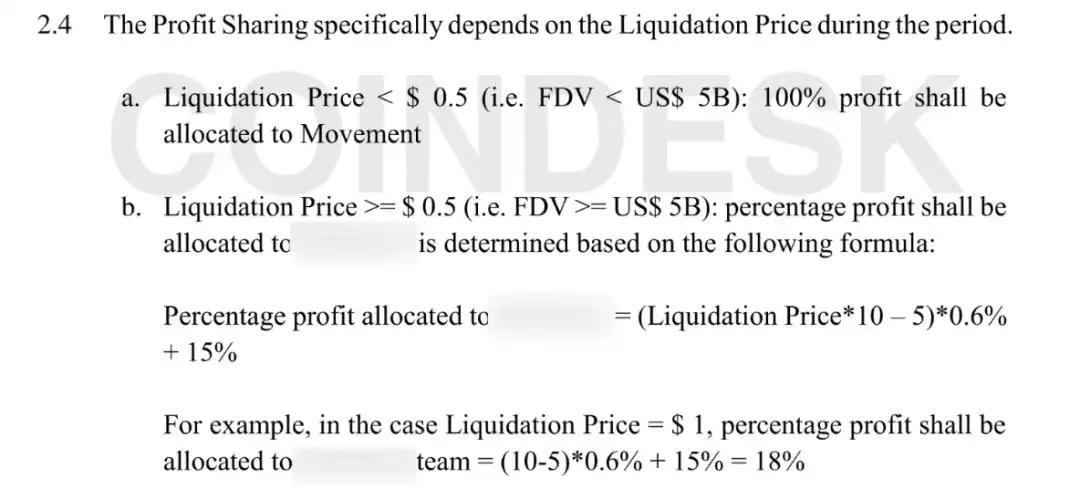
The early agreement signed on November 25, structurally similar to the contract rejected on November 27, still explicitly allows market makers to carry out liquidation operations when the MOVE token price reaches a specific threshold.
This setting, considered by industry figures like Zaki Manian to be a "highly manipulative risk," is a core mechanism where manipulation could occur through orchestrated price movements followed by concentrated selling to profit from it. This indicates that even in subsequent versions apparently modified on the surface, some key stakeholders behind the project continue to drive a path of operation with inherent arbitrage incentives without substantively addressing the fundamental risk.
"Shadow Co-Founder"? Behind-the-Scenes Operator Emerges, Zebec Founder Allegedly Deeply Involved in Protocol Design
Multiple sources close to the Movement project revealed to CoinDesk that there are still many speculations about the true mastermind of the Rentech protocol. The agreement, which was directly linked to the massive December sell-off of the MOVE token and a public relations storm, had its initial version circulated internally by co-founder Rushi Manche and was actively promoted by him in the decision-making process.
According to Blockworks, Manche was briefly suspended last week due to his involvement in the protocol. Manche himself responded, stating that MVMT Labs has always relied on the Foundation team and multiple advisors for advice and assistance in selecting market makers, but "it now appears that at least one Foundation member represented the interests of both sides of the agreement, which has become a focal point of our current investigation."
Simultaneously, another key figure, Sam Thapaliya, has also attracted significant attention. Thapaliya is the founder of the crypto payment protocol Zebec and has long been an advisor to Manche and co-founder Scanlon. He was cc'd on multiple emails exchanged between Web3Port and Movement, appearing alongside Rentech, Manche, in crucial communications.
This clue reinforces external suspicions that Thapaliya may have played a "behind-the-scenes orchestrator" role in Rentech's design - not merely an advisor but rather the driving force behind the protocol's structure and deeply involved in decision-making as a "shadow co-founder."
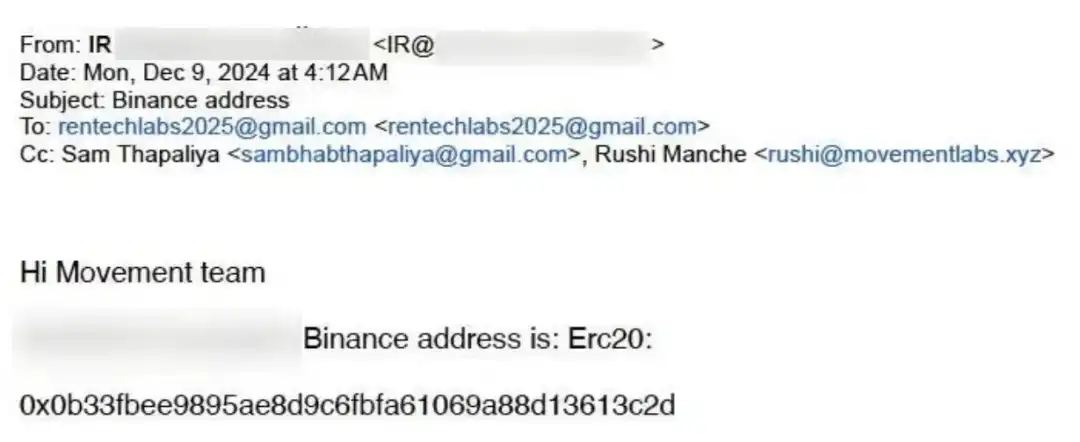
According to several Movement employees, Zebec founder Sam Thapaliya may be playing a role within the project far beyond his advisory capacity. Some have referred to him as "Rushi's (Manche) close advisor, a sort of shadow third co-founder," and pointed out: "Rushi has always been secretive about this relationship, and we usually only hear about him occasionally."
Another employee, on the other hand, stated, "Many times we have reached consensus on a certain matter, but at the last moment there is always a change, and at such times we usually know that it might be Sam's opinion."
According to three eyewitnesses, Thapaliya appeared at Movement's San Francisco office on the day the MOVE token was launched to the public. CoinDesk also reviewed multiple Telegram screenshots showing co-founder Scanlon had entrusted Thapaliya to assist in screening the MOVE airdrop list—a highly sensitive part of the project's community token distribution mechanism.
Such arrangements further deepened the impression of some team members: Thapaliya's actual influence in the project is far deeper and more covert than his public persona suggests. In response to this, Thapaliya told CoinDesk that he had met Manche and Scanlon during his university years and had since been involved in the project as an external advisor, but he "does not hold any shares in Movement Labs, has not received tokens from the Movement Foundation, and does not have any decision-making power."
Who Is Rentech? Behind the Veil of Mystery, Founder and Project Legal Advisor Point Fingers at Each Other
At the heart of the MOVE token controversy is Rentech, founded by Galen Law-Kun—a business partner of Zebec founder Sam Thapaliya. Law-Kun told CoinDesk that Rentech is a subsidiary of his Singapore-registered financial services company Autonomy, aimed at bridging financing for crypto projects and Asian family offices.
Law-Kun claimed that YK Pek, the Movement Foundation's general legal counsel, not only assisted in setting up Autonomy SG but was also the legal counsel for the company (or its affiliates) Rentech. He also stated that despite Pek's strong internal opposition to the Rentech agreement, he himself had actually helped design Rentech's structure and participated in drafting the initial version of the liquidity agreement, "the contents of which were almost identical to the formal contract version he later drafted for the foundation."
However, CoinDesk's investigation did not find direct evidence of Pek working at Autonomy or in that capacity drafting any contracts related to Rentech.
In response to this, Pek stated, "I have never been, nor have I ever been the legal counsel for Galen or any of its entities." He explained that a corporate secretarial services company he co-founded did provide secretarial services to two companies under Galen, but these two companies were not Rentech, and they both declared "no assets" in their 2025 annual audit.
Pek further stated that he had spent two hours reviewing an advisory agreement between Galen and a certain project in 2024, and only provided free advice on the FTX case deadline and NDA documents. "I have no idea why Galen would claim that I am his general counsel, which leaves me confused and unsettled."
Pek also pointed out that the legal teams of Movement Foundation and Movement Labs were introduced to the lawyer hired by Rentech, GS Legal, through co-founder Rushi Manche.
On the other hand, according to Galen, Pek had been introduced to 10 different projects as the "Autonomy legal advisor" and did not deny this title. Regarding GS Legal's involvement, it was "a formal process completed only at Movement's request."
Following the incident, Movement Labs co-founder Cooper Scanlon emphasized in an internal Slack announcement that the company had engaged an external audit firm, Groom Lake, to conduct a third-party independent investigation into the recent anomalies in the liquidity arrangements. He reiterated, "Movement is a victim in this incident."
This series of mutual denials and accusations has exposed the intricate interpersonal and legal relationships behind Rentech and has further propelled the MOVE saga from a market event into the core maelstrom of trust crisis and governance rift.
You may also like

Token Cannot Compound, Where Is the Real Investment Opportunity?

February 6th Market Key Intelligence, How Much Did You Miss?

China's Central Bank and Eight Other Departments' Latest Regulatory Focus: Key Attention to RWA Tokenized Asset Risk
Foreword: Today, the People's Bank of China's website published the "Notice of the People's Bank of China, National Development and Reform Commission, Ministry of Industry and Information Technology, Ministry of Public Security, State Administration for Market Regulation, China Banking and Insurance Regulatory Commission, China Securities Regulatory Commission, State Administration of Foreign Exchange on Further Preventing and Dealing with Risks Related to Virtual Currency and Others (Yinfa [2026] No. 42)", the latest regulatory requirements from the eight departments including the central bank, which are basically consistent with the regulatory requirements of recent years. The main focus of the regulation is on speculative activities such as virtual currency trading, exchanges, ICOs, overseas platform services, and this time, regulatory oversight of RWA has been added, explicitly prohibiting RWA tokenization, stablecoins (especially those pegged to the RMB). The following is the full text:
To the people's governments of all provinces, autonomous regions, and municipalities directly under the Central Government, the Xinjiang Production and Construction Corps:
Recently, there have been speculative activities related to virtual currency and Real-World Assets (RWA) tokenization, disrupting the economic and financial order and jeopardizing the property security of the people. In order to further prevent and address the risks related to virtual currency and Real-World Assets tokenization, effectively safeguard national security and social stability, in accordance with the "Law of the People's Republic of China on the People's Bank of China," "Law of the People's Republic of China on Commercial Banks," "Securities Law of the People's Republic of China," "Law of the People's Republic of China on Securities Investment Funds," "Law of the People's Republic of China on Futures and Derivatives," "Cybersecurity Law of the People's Republic of China," "Regulations of the People's Republic of China on the Administration of Renminbi," "Regulations on Prevention and Disposal of Illegal Fundraising," "Regulations of the People's Republic of China on Foreign Exchange Administration," "Telecommunications Regulations of the People's Republic of China," and other provisions, after reaching consensus with the Cyberspace Administration of China, the Supreme People's Court, and the Supreme People's Procuratorate, and with the approval of the State Council, the relevant matters are notified as follows:
(I) Virtual currency does not possess the legal status equivalent to fiat currency. Virtual currencies such as Bitcoin, Ether, Tether, etc., have the main characteristics of being issued by non-monetary authorities, using encryption technology and distributed ledger or similar technology, existing in digital form, etc. They do not have legal tender status, should not and cannot be circulated and used as currency in the market.
The business activities related to virtual currency are classified as illegal financial activities. The exchange of fiat currency and virtual currency within the territory, exchange of virtual currencies, acting as a central counterparty in buying and selling virtual currencies, providing information intermediary and pricing services for virtual currency transactions, token issuance financing, and trading of virtual currency-related financial products, etc., fall under illegal financial activities, such as suspected illegal issuance of token vouchers, unauthorized public issuance of securities, illegal operation of securities and futures business, illegal fundraising, etc., are strictly prohibited across the board and resolutely banned in accordance with the law. Overseas entities and individuals are not allowed to provide virtual currency-related services to domestic entities in any form.
A stablecoin pegged to a fiat currency indirectly fulfills some functions of the fiat currency in circulation. Without the consent of relevant authorities in accordance with the law and regulations, any domestic or foreign entity or individual is not allowed to issue a RMB-pegged stablecoin overseas.
(II)Tokenization of Real-World Assets refers to the use of encryption technology and distributed ledger or similar technologies to transform ownership rights, income rights, etc., of assets into tokens (tokens) or other interests or bond certificates with token (token) characteristics, and carry out issuance and trading activities.
Engaging in the tokenization of real-world assets domestically, as well as providing related intermediary, information technology services, etc., which are suspected of illegal issuance of token vouchers, unauthorized public offering of securities, illegal operation of securities and futures business, illegal fundraising, and other illegal financial activities, shall be prohibited; except for relevant business activities carried out with the approval of the competent authorities in accordance with the law and regulations and relying on specific financial infrastructures. Overseas entities and individuals are not allowed to illegally provide services related to the tokenization of real-world assets to domestic entities in any form.
(III) Inter-agency Coordination. The People's Bank of China, together with the National Development and Reform Commission, the Ministry of Industry and Information Technology, the Ministry of Public Security, the State Administration for Market Regulation, the China Banking and Insurance Regulatory Commission, the China Securities Regulatory Commission, the State Administration of Foreign Exchange, and other departments, will improve the work mechanism, strengthen coordination with the Cyberspace Administration of China, the Supreme People's Court, and the Supreme People's Procuratorate, coordinate efforts, and overall guide regions to carry out risk prevention and disposal of virtual currency-related illegal financial activities.
The China Securities Regulatory Commission, together with the National Development and Reform Commission, the Ministry of Industry and Information Technology, the Ministry of Public Security, the People's Bank of China, the State Administration for Market Regulation, the China Banking and Insurance Regulatory Commission, the State Administration of Foreign Exchange, and other departments, will improve the work mechanism, strengthen coordination with the Cyberspace Administration of China, the Supreme People's Court, and the Supreme People's Procuratorate, coordinate efforts, and overall guide regions to carry out risk prevention and disposal of illegal financial activities related to the tokenization of real-world assets.
(IV) Strengthening Local Implementation. The people's governments at the provincial level are overall responsible for the prevention and disposal of risks related to virtual currencies and the tokenization of real-world assets in their respective administrative regions. The specific leading department is the local financial regulatory department, with participation from branches and dispatched institutions of the State Council's financial regulatory department, telecommunications regulators, public security, market supervision, and other departments, in coordination with cyberspace departments, courts, and procuratorates, to improve the normalization of the work mechanism, effectively connect with the relevant work mechanisms of central departments, form a cooperative and coordinated working pattern between central and local governments, effectively prevent and properly handle risks related to virtual currencies and the tokenization of real-world assets, and maintain economic and financial order and social stability.
(5) Enhanced Risk Monitoring. The People's Bank of China, China Securities Regulatory Commission, National Development and Reform Commission, Ministry of Industry and Information Technology, Ministry of Public Security, State Administration of Foreign Exchange, Cyberspace Administration of China, and other departments continue to improve monitoring techniques and system support, enhance cross-departmental data analysis and sharing, establish sound information sharing and cross-validation mechanisms, promptly grasp the risk situation of activities related to virtual currency and real-world asset tokenization. Local governments at all levels give full play to the role of local monitoring and early warning mechanisms. Local financial regulatory authorities, together with branches and agencies of the State Council's financial regulatory authorities, as well as departments of cyberspace and public security, ensure effective connection between online monitoring, offline investigation, and fund tracking, efficiently and accurately identify activities related to virtual currency and real-world asset tokenization, promptly share risk information, improve early warning information dissemination, verification, and rapid response mechanisms.
(6) Strengthened Oversight of Financial Institutions, Intermediaries, and Technology Service Providers. Financial institutions (including non-bank payment institutions) are prohibited from providing account opening, fund transfer, and clearing services for virtual currency-related business activities, issuing and selling financial products related to virtual currency, including virtual currency and related financial products in the scope of collateral, conducting insurance business related to virtual currency, or including virtual currency in the scope of insurance liability. Financial institutions (including non-bank payment institutions) are prohibited from providing custody, clearing, and settlement services for unauthorized real-world asset tokenization-related business and related financial products. Relevant intermediary institutions and information technology service providers are prohibited from providing intermediary, technical, or other services for unauthorized real-world asset tokenization-related businesses and related financial products.
(7) Enhanced Management of Internet Information Content and Access. Internet enterprises are prohibited from providing online business venues, commercial displays, marketing, advertising, or paid traffic diversion services for virtual currency and real-world asset tokenization-related business activities. Upon discovering clues of illegal activities, they should promptly report to relevant departments and provide technical support and assistance for related investigations and inquiries. Based on the clues transferred by the financial regulatory authorities, the cyberspace administration, telecommunications authorities, and public security departments should promptly close and deal with websites, mobile applications (including mini-programs), and public accounts engaged in virtual currency and real-world asset tokenization-related business activities in accordance with the law.
(8) Strengthened Entity Registration and Advertisement Management. Market supervision departments strengthen entity registration and management, and enterprise and individual business registrations must not contain terms such as "virtual currency," "virtual asset," "cryptocurrency," "crypto asset," "stablecoin," "real-world asset tokenization," or "RWA" in their names or business scopes. Market supervision departments, together with financial regulatory authorities, legally enhance the supervision of advertisements related to virtual currency and real-world asset tokenization, promptly investigating and handling relevant illegal advertisements.
(IX) Continued Rectification of Virtual Currency Mining Activities. The National Development and Reform Commission, together with relevant departments, strictly controls virtual currency mining activities, continuously promotes the rectification of virtual currency mining activities. The people's governments of various provinces take overall responsibility for the rectification of "mining" within their respective administrative regions. In accordance with the requirements of the National Development and Reform Commission and other departments in the "Notice on the Rectification of Virtual Currency Mining Activities" (NDRC Energy-saving Building [2021] No. 1283) and the provisions of the "Guidance Catalog for Industrial Structure Adjustment (2024 Edition)," a comprehensive review, investigation, and closure of existing virtual currency mining projects are conducted, new mining projects are strictly prohibited, and mining machine production enterprises are strictly prohibited from providing mining machine sales and other services within the country.
(X) Severe Crackdown on Related Illegal Financial Activities. Upon discovering clues to illegal financial activities related to virtual currency and the tokenization of real-world assets, local financial regulatory authorities, branches of the State Council's financial regulatory authorities, and other relevant departments promptly investigate, determine, and properly handle the issues in accordance with the law, and seriously hold the relevant entities and individuals legally responsible. Those suspected of crimes are transferred to the judicial authorities for processing according to the law.
(XI) Severe Crackdown on Related Illegal and Criminal Activities. The Ministry of Public Security, the People's Bank of China, the State Administration for Market Regulation, the China Banking and Insurance Regulatory Commission, the China Securities Regulatory Commission, as well as judicial and procuratorial organs, in accordance with their respective responsibilities, rigorously crack down on illegal and criminal activities related to virtual currency, the tokenization of real-world assets, such as fraud, money laundering, illegal business operations, pyramid schemes, illegal fundraising, and other illegal and criminal activities carried out under the guise of virtual currency, the tokenization of real-world assets, etc.
(XII) Strengthen Industry Self-discipline. Relevant industry associations should enhance membership management and policy advocacy, based on their own responsibilities, advocate and urge member units to resist illegal financial activities related to virtual currency and the tokenization of real-world assets. Member units that violate regulatory policies and industry self-discipline rules are to be disciplined in accordance with relevant self-regulatory management regulations. By leveraging various industry infrastructure, conduct risk monitoring related to virtual currency, the tokenization of real-world assets, and promptly transfer issue clues to relevant departments.
(XIII) Without the approval of relevant departments in accordance with the law and regulations, domestic entities and foreign entities controlled by them may not issue virtual currency overseas.
(XIV) Domestic entities engaging directly or indirectly in overseas external debt-based tokenization of real-world assets, or conducting asset securitization activities abroad based on domestic ownership rights, income rights, etc. (hereinafter referred to as domestic equity), should be strictly regulated in accordance with the principles of "same business, same risk, same rules." The National Development and Reform Commission, the China Securities Regulatory Commission, the State Administration of Foreign Exchange, and other relevant departments regulate it according to their respective responsibilities. For other forms of overseas real-world asset tokenization activities based on domestic equity by domestic entities, the China Securities Regulatory Commission, together with relevant departments, supervise according to their division of responsibilities. Without the consent and filing of relevant departments, no unit or individual may engage in the above-mentioned business.
(15) Overseas subsidiaries and branches of domestic financial institutions providing Real World Asset Tokenization-related services overseas shall do so legally and prudently. They shall have professional personnel and systems in place to effectively mitigate business risks, strictly implement customer onboarding, suitability management, anti-money laundering requirements, and incorporate them into the domestic financial institutions' compliance and risk management system. Intermediaries and information technology service providers offering Real World Asset Tokenization services abroad based on domestic equity or conducting Real World Asset Tokenization business in the form of overseas debt for domestic entities directly or indirectly venturing abroad must strictly comply with relevant laws and regulations. They should establish and improve relevant compliance and internal control systems in accordance with relevant normative requirements, strengthen business and risk control, and report the business developments to the relevant regulatory authorities for approval or filing.
(16) Strengthen organizational leadership and overall coordination. All departments and regions should attach great importance to the prevention of risks related to virtual currencies and Real World Asset Tokenization, strengthen organizational leadership, clarify work responsibilities, form a long-term effective working mechanism with centralized coordination, local implementation, and shared responsibilities, maintain high pressure, dynamically monitor risks, effectively prevent and mitigate risks in an orderly and efficient manner, legally protect the property security of the people, and make every effort to maintain economic and financial order and social stability.
(17) Widely carry out publicity and education. All departments, regions, and industry associations should make full use of various media and other communication channels to disseminate information through legal and policy interpretation, analysis of typical cases, and education on investment risks, etc. They should promote the illegality and harm of virtual currencies and Real World Asset Tokenization-related businesses and their manifestations, fully alert to potential risks and hidden dangers, and enhance public awareness and identification capabilities for risk prevention.
(18) Engaging in illegal financial activities related to virtual currencies and Real World Asset Tokenization in violation of this notice, as well as providing services for virtual currencies and Real World Asset Tokenization-related businesses, shall be punished in accordance with relevant regulations. If it constitutes a crime, criminal liability shall be pursued according to the law. For domestic entities and individuals who knowingly or should have known that overseas entities illegally provided virtual currency or Real World Asset Tokenization-related services to domestic entities and still assisted them, relevant responsibilities shall be pursued according to the law. If it constitutes a crime, criminal liability shall be pursued according to the law.
(19) If any unit or individual invests in virtual currencies, Real World Asset Tokens, and related financial products against public order and good customs, the relevant civil legal actions shall be invalid, and any resulting losses shall be borne by them. If there are suspicions of disrupting financial order and jeopardizing financial security, the relevant departments shall deal with them according to the law.
This notice shall enter into force upon the date of its issuance. The People's Bank of China and ten other departments' "Notice on Further Preventing and Dealing with the Risks of Virtual Currency Trading Speculation" (Yinfa [2021] No. 237) is hereby repealed.

Former Partner's Perspective on Multicoin: Kyle's Exit, But the Game He Left Behind Just Getting Started
Why Bitcoin Is Falling Now: The Real Reasons Behind BTC's Crash & WEEX's Smart Profit Playbook
Bitcoin's ongoing crash explained: Discover the 5 hidden triggers behind BTC's plunge & how WEEX's Auto Earn and Trade to Earn strategies help traders profit from crypto market volatility.

Wall Street's Hottest Trades See Exodus

Vitalik Discusses Ethereum Scaling Path, Circle Announces Partnership with Polymarket, What's the Overseas Crypto Community Talking About Today?

Believing in the Capital Markets - The Essence and Core Value of Cryptocurrency

Polymarket's 'Weatherman': Predict Temperature, Win Million-Dollar Payout

$15K+ Profits: The 4 AI Trading Secrets WEEX Hackathon Prelim Winners Used to Dominate Volatile Crypto Markets
How WEEX Hackathon's top AI trading strategies made $15K+ in crypto markets: 4 proven rules for ETH/BTC trading, market structure analysis, and risk management in volatile conditions.

A nearly 20% one-day plunge, how long has it been since you last saw a $60,000 Bitcoin?

Raoul Pal: I've seen every single panic, and they are never the end.

Key Market Information Discrepancy on February 6th - A Must-Read! | Alpha Morning Report

2026 Crypto Industry's First Snowfall
The Harsh Reality Behind the $26 Billion Crypto Liquidation: Liquidity Is Killing the Market
Why Is Gold, US Stocks, Bitcoin All Falling?

Key Market Intelligence for February 5th, how much did you miss out on?

Wintermute: By 2026, crypto had gradually become the settlement layer of the Internet economy
Token Cannot Compound, Where Is the Real Investment Opportunity?
February 6th Market Key Intelligence, How Much Did You Miss?
China's Central Bank and Eight Other Departments' Latest Regulatory Focus: Key Attention to RWA Tokenized Asset Risk
Foreword: Today, the People's Bank of China's website published the "Notice of the People's Bank of China, National Development and Reform Commission, Ministry of Industry and Information Technology, Ministry of Public Security, State Administration for Market Regulation, China Banking and Insurance Regulatory Commission, China Securities Regulatory Commission, State Administration of Foreign Exchange on Further Preventing and Dealing with Risks Related to Virtual Currency and Others (Yinfa [2026] No. 42)", the latest regulatory requirements from the eight departments including the central bank, which are basically consistent with the regulatory requirements of recent years. The main focus of the regulation is on speculative activities such as virtual currency trading, exchanges, ICOs, overseas platform services, and this time, regulatory oversight of RWA has been added, explicitly prohibiting RWA tokenization, stablecoins (especially those pegged to the RMB). The following is the full text:
To the people's governments of all provinces, autonomous regions, and municipalities directly under the Central Government, the Xinjiang Production and Construction Corps:
Recently, there have been speculative activities related to virtual currency and Real-World Assets (RWA) tokenization, disrupting the economic and financial order and jeopardizing the property security of the people. In order to further prevent and address the risks related to virtual currency and Real-World Assets tokenization, effectively safeguard national security and social stability, in accordance with the "Law of the People's Republic of China on the People's Bank of China," "Law of the People's Republic of China on Commercial Banks," "Securities Law of the People's Republic of China," "Law of the People's Republic of China on Securities Investment Funds," "Law of the People's Republic of China on Futures and Derivatives," "Cybersecurity Law of the People's Republic of China," "Regulations of the People's Republic of China on the Administration of Renminbi," "Regulations on Prevention and Disposal of Illegal Fundraising," "Regulations of the People's Republic of China on Foreign Exchange Administration," "Telecommunications Regulations of the People's Republic of China," and other provisions, after reaching consensus with the Cyberspace Administration of China, the Supreme People's Court, and the Supreme People's Procuratorate, and with the approval of the State Council, the relevant matters are notified as follows:
(I) Virtual currency does not possess the legal status equivalent to fiat currency. Virtual currencies such as Bitcoin, Ether, Tether, etc., have the main characteristics of being issued by non-monetary authorities, using encryption technology and distributed ledger or similar technology, existing in digital form, etc. They do not have legal tender status, should not and cannot be circulated and used as currency in the market.
The business activities related to virtual currency are classified as illegal financial activities. The exchange of fiat currency and virtual currency within the territory, exchange of virtual currencies, acting as a central counterparty in buying and selling virtual currencies, providing information intermediary and pricing services for virtual currency transactions, token issuance financing, and trading of virtual currency-related financial products, etc., fall under illegal financial activities, such as suspected illegal issuance of token vouchers, unauthorized public issuance of securities, illegal operation of securities and futures business, illegal fundraising, etc., are strictly prohibited across the board and resolutely banned in accordance with the law. Overseas entities and individuals are not allowed to provide virtual currency-related services to domestic entities in any form.
A stablecoin pegged to a fiat currency indirectly fulfills some functions of the fiat currency in circulation. Without the consent of relevant authorities in accordance with the law and regulations, any domestic or foreign entity or individual is not allowed to issue a RMB-pegged stablecoin overseas.
(II)Tokenization of Real-World Assets refers to the use of encryption technology and distributed ledger or similar technologies to transform ownership rights, income rights, etc., of assets into tokens (tokens) or other interests or bond certificates with token (token) characteristics, and carry out issuance and trading activities.
Engaging in the tokenization of real-world assets domestically, as well as providing related intermediary, information technology services, etc., which are suspected of illegal issuance of token vouchers, unauthorized public offering of securities, illegal operation of securities and futures business, illegal fundraising, and other illegal financial activities, shall be prohibited; except for relevant business activities carried out with the approval of the competent authorities in accordance with the law and regulations and relying on specific financial infrastructures. Overseas entities and individuals are not allowed to illegally provide services related to the tokenization of real-world assets to domestic entities in any form.
(III) Inter-agency Coordination. The People's Bank of China, together with the National Development and Reform Commission, the Ministry of Industry and Information Technology, the Ministry of Public Security, the State Administration for Market Regulation, the China Banking and Insurance Regulatory Commission, the China Securities Regulatory Commission, the State Administration of Foreign Exchange, and other departments, will improve the work mechanism, strengthen coordination with the Cyberspace Administration of China, the Supreme People's Court, and the Supreme People's Procuratorate, coordinate efforts, and overall guide regions to carry out risk prevention and disposal of virtual currency-related illegal financial activities.
The China Securities Regulatory Commission, together with the National Development and Reform Commission, the Ministry of Industry and Information Technology, the Ministry of Public Security, the People's Bank of China, the State Administration for Market Regulation, the China Banking and Insurance Regulatory Commission, the State Administration of Foreign Exchange, and other departments, will improve the work mechanism, strengthen coordination with the Cyberspace Administration of China, the Supreme People's Court, and the Supreme People's Procuratorate, coordinate efforts, and overall guide regions to carry out risk prevention and disposal of illegal financial activities related to the tokenization of real-world assets.
(IV) Strengthening Local Implementation. The people's governments at the provincial level are overall responsible for the prevention and disposal of risks related to virtual currencies and the tokenization of real-world assets in their respective administrative regions. The specific leading department is the local financial regulatory department, with participation from branches and dispatched institutions of the State Council's financial regulatory department, telecommunications regulators, public security, market supervision, and other departments, in coordination with cyberspace departments, courts, and procuratorates, to improve the normalization of the work mechanism, effectively connect with the relevant work mechanisms of central departments, form a cooperative and coordinated working pattern between central and local governments, effectively prevent and properly handle risks related to virtual currencies and the tokenization of real-world assets, and maintain economic and financial order and social stability.
(5) Enhanced Risk Monitoring. The People's Bank of China, China Securities Regulatory Commission, National Development and Reform Commission, Ministry of Industry and Information Technology, Ministry of Public Security, State Administration of Foreign Exchange, Cyberspace Administration of China, and other departments continue to improve monitoring techniques and system support, enhance cross-departmental data analysis and sharing, establish sound information sharing and cross-validation mechanisms, promptly grasp the risk situation of activities related to virtual currency and real-world asset tokenization. Local governments at all levels give full play to the role of local monitoring and early warning mechanisms. Local financial regulatory authorities, together with branches and agencies of the State Council's financial regulatory authorities, as well as departments of cyberspace and public security, ensure effective connection between online monitoring, offline investigation, and fund tracking, efficiently and accurately identify activities related to virtual currency and real-world asset tokenization, promptly share risk information, improve early warning information dissemination, verification, and rapid response mechanisms.
(6) Strengthened Oversight of Financial Institutions, Intermediaries, and Technology Service Providers. Financial institutions (including non-bank payment institutions) are prohibited from providing account opening, fund transfer, and clearing services for virtual currency-related business activities, issuing and selling financial products related to virtual currency, including virtual currency and related financial products in the scope of collateral, conducting insurance business related to virtual currency, or including virtual currency in the scope of insurance liability. Financial institutions (including non-bank payment institutions) are prohibited from providing custody, clearing, and settlement services for unauthorized real-world asset tokenization-related business and related financial products. Relevant intermediary institutions and information technology service providers are prohibited from providing intermediary, technical, or other services for unauthorized real-world asset tokenization-related businesses and related financial products.
(7) Enhanced Management of Internet Information Content and Access. Internet enterprises are prohibited from providing online business venues, commercial displays, marketing, advertising, or paid traffic diversion services for virtual currency and real-world asset tokenization-related business activities. Upon discovering clues of illegal activities, they should promptly report to relevant departments and provide technical support and assistance for related investigations and inquiries. Based on the clues transferred by the financial regulatory authorities, the cyberspace administration, telecommunications authorities, and public security departments should promptly close and deal with websites, mobile applications (including mini-programs), and public accounts engaged in virtual currency and real-world asset tokenization-related business activities in accordance with the law.
(8) Strengthened Entity Registration and Advertisement Management. Market supervision departments strengthen entity registration and management, and enterprise and individual business registrations must not contain terms such as "virtual currency," "virtual asset," "cryptocurrency," "crypto asset," "stablecoin," "real-world asset tokenization," or "RWA" in their names or business scopes. Market supervision departments, together with financial regulatory authorities, legally enhance the supervision of advertisements related to virtual currency and real-world asset tokenization, promptly investigating and handling relevant illegal advertisements.
(IX) Continued Rectification of Virtual Currency Mining Activities. The National Development and Reform Commission, together with relevant departments, strictly controls virtual currency mining activities, continuously promotes the rectification of virtual currency mining activities. The people's governments of various provinces take overall responsibility for the rectification of "mining" within their respective administrative regions. In accordance with the requirements of the National Development and Reform Commission and other departments in the "Notice on the Rectification of Virtual Currency Mining Activities" (NDRC Energy-saving Building [2021] No. 1283) and the provisions of the "Guidance Catalog for Industrial Structure Adjustment (2024 Edition)," a comprehensive review, investigation, and closure of existing virtual currency mining projects are conducted, new mining projects are strictly prohibited, and mining machine production enterprises are strictly prohibited from providing mining machine sales and other services within the country.
(X) Severe Crackdown on Related Illegal Financial Activities. Upon discovering clues to illegal financial activities related to virtual currency and the tokenization of real-world assets, local financial regulatory authorities, branches of the State Council's financial regulatory authorities, and other relevant departments promptly investigate, determine, and properly handle the issues in accordance with the law, and seriously hold the relevant entities and individuals legally responsible. Those suspected of crimes are transferred to the judicial authorities for processing according to the law.
(XI) Severe Crackdown on Related Illegal and Criminal Activities. The Ministry of Public Security, the People's Bank of China, the State Administration for Market Regulation, the China Banking and Insurance Regulatory Commission, the China Securities Regulatory Commission, as well as judicial and procuratorial organs, in accordance with their respective responsibilities, rigorously crack down on illegal and criminal activities related to virtual currency, the tokenization of real-world assets, such as fraud, money laundering, illegal business operations, pyramid schemes, illegal fundraising, and other illegal and criminal activities carried out under the guise of virtual currency, the tokenization of real-world assets, etc.
(XII) Strengthen Industry Self-discipline. Relevant industry associations should enhance membership management and policy advocacy, based on their own responsibilities, advocate and urge member units to resist illegal financial activities related to virtual currency and the tokenization of real-world assets. Member units that violate regulatory policies and industry self-discipline rules are to be disciplined in accordance with relevant self-regulatory management regulations. By leveraging various industry infrastructure, conduct risk monitoring related to virtual currency, the tokenization of real-world assets, and promptly transfer issue clues to relevant departments.
(XIII) Without the approval of relevant departments in accordance with the law and regulations, domestic entities and foreign entities controlled by them may not issue virtual currency overseas.
(XIV) Domestic entities engaging directly or indirectly in overseas external debt-based tokenization of real-world assets, or conducting asset securitization activities abroad based on domestic ownership rights, income rights, etc. (hereinafter referred to as domestic equity), should be strictly regulated in accordance with the principles of "same business, same risk, same rules." The National Development and Reform Commission, the China Securities Regulatory Commission, the State Administration of Foreign Exchange, and other relevant departments regulate it according to their respective responsibilities. For other forms of overseas real-world asset tokenization activities based on domestic equity by domestic entities, the China Securities Regulatory Commission, together with relevant departments, supervise according to their division of responsibilities. Without the consent and filing of relevant departments, no unit or individual may engage in the above-mentioned business.
(15) Overseas subsidiaries and branches of domestic financial institutions providing Real World Asset Tokenization-related services overseas shall do so legally and prudently. They shall have professional personnel and systems in place to effectively mitigate business risks, strictly implement customer onboarding, suitability management, anti-money laundering requirements, and incorporate them into the domestic financial institutions' compliance and risk management system. Intermediaries and information technology service providers offering Real World Asset Tokenization services abroad based on domestic equity or conducting Real World Asset Tokenization business in the form of overseas debt for domestic entities directly or indirectly venturing abroad must strictly comply with relevant laws and regulations. They should establish and improve relevant compliance and internal control systems in accordance with relevant normative requirements, strengthen business and risk control, and report the business developments to the relevant regulatory authorities for approval or filing.
(16) Strengthen organizational leadership and overall coordination. All departments and regions should attach great importance to the prevention of risks related to virtual currencies and Real World Asset Tokenization, strengthen organizational leadership, clarify work responsibilities, form a long-term effective working mechanism with centralized coordination, local implementation, and shared responsibilities, maintain high pressure, dynamically monitor risks, effectively prevent and mitigate risks in an orderly and efficient manner, legally protect the property security of the people, and make every effort to maintain economic and financial order and social stability.
(17) Widely carry out publicity and education. All departments, regions, and industry associations should make full use of various media and other communication channels to disseminate information through legal and policy interpretation, analysis of typical cases, and education on investment risks, etc. They should promote the illegality and harm of virtual currencies and Real World Asset Tokenization-related businesses and their manifestations, fully alert to potential risks and hidden dangers, and enhance public awareness and identification capabilities for risk prevention.
(18) Engaging in illegal financial activities related to virtual currencies and Real World Asset Tokenization in violation of this notice, as well as providing services for virtual currencies and Real World Asset Tokenization-related businesses, shall be punished in accordance with relevant regulations. If it constitutes a crime, criminal liability shall be pursued according to the law. For domestic entities and individuals who knowingly or should have known that overseas entities illegally provided virtual currency or Real World Asset Tokenization-related services to domestic entities and still assisted them, relevant responsibilities shall be pursued according to the law. If it constitutes a crime, criminal liability shall be pursued according to the law.
(19) If any unit or individual invests in virtual currencies, Real World Asset Tokens, and related financial products against public order and good customs, the relevant civil legal actions shall be invalid, and any resulting losses shall be borne by them. If there are suspicions of disrupting financial order and jeopardizing financial security, the relevant departments shall deal with them according to the law.
This notice shall enter into force upon the date of its issuance. The People's Bank of China and ten other departments' "Notice on Further Preventing and Dealing with the Risks of Virtual Currency Trading Speculation" (Yinfa [2021] No. 237) is hereby repealed.
Former Partner's Perspective on Multicoin: Kyle's Exit, But the Game He Left Behind Just Getting Started
Why Bitcoin Is Falling Now: The Real Reasons Behind BTC's Crash & WEEX's Smart Profit Playbook
Bitcoin's ongoing crash explained: Discover the 5 hidden triggers behind BTC's plunge & how WEEX's Auto Earn and Trade to Earn strategies help traders profit from crypto market volatility.


 App
App